
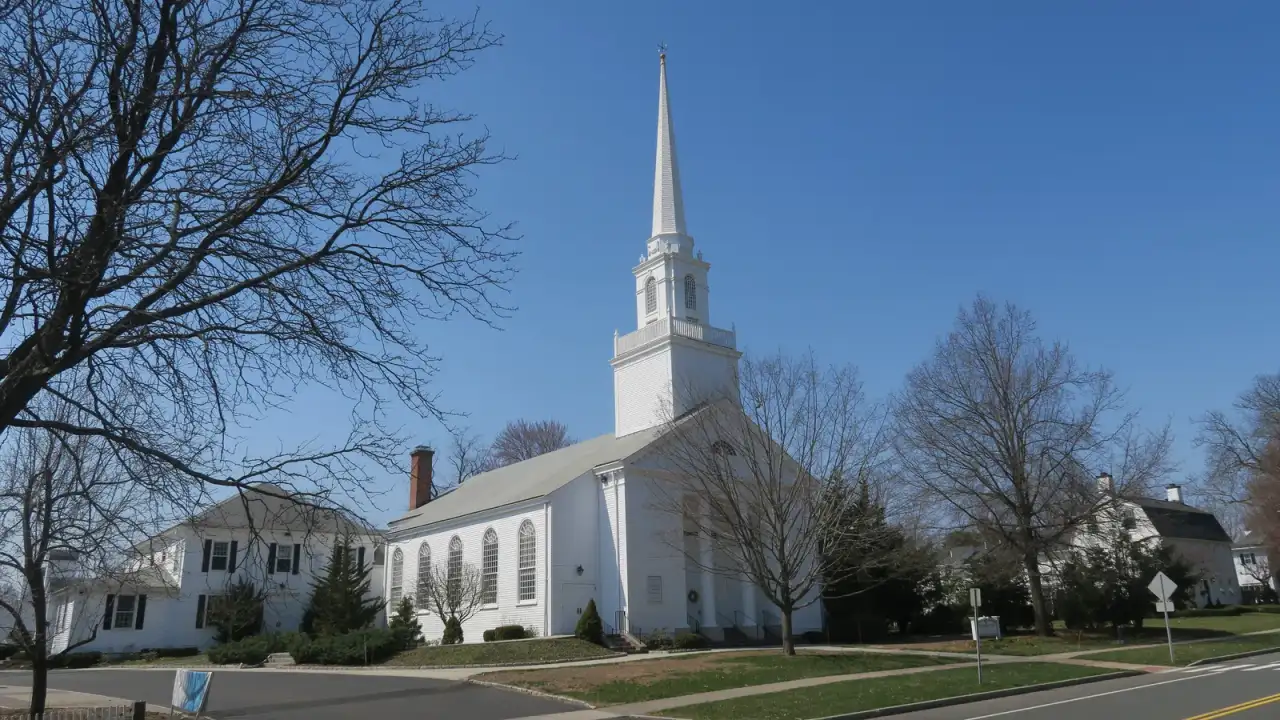
About 7 mi / 15 min southeast of Hartford. Same-week scheduling for planned installs, basement finishes, and additions; priority visits for water-damaged or sagging ceilings, which we treat as urgent.
Drywall and Plaster Repair in Glastonbury
Hartford Elite Drywall finishes and repairs drywall and plaster across Glastonbury, from the newer basement-and-addition homes toward Buckingham to the plaster in historic South Glastonbury. Glastonbury sits on the east bank of the Connecticut River, about seven miles southeast of Hartford across the Putnam Bridge. It is an upscale suburb, and its housing splits into two worlds that ask for different work. Most of the town is newer and larger: 1980s through 2000s colonials and custom homes on generous lots, spreading east of the center and out toward Buckingham. Layered under that is a genuine historic core, the Main Street villages of Glastonbury Center and South Glastonbury, where 18th- and 19th-century houses sit in listed historic districts. Knowing which Glastonbury you are standing in tells the company most of what a wall or ceiling needs.
Basement finishing and additions toward Buckingham
Hartford Elite Drywall finishes basements and hangs additions in the larger homes toward Buckingham, Addison, and the east side of town, where the recurring work is build-out. These houses tend to have deep, dry, unfinished basements, and finishing one into a family room, gym, or in-law suite is planned, higher-ticket work. It is not just hanging board: a finished lower level has to meet egress, handle moisture, and hold the fire-separation rating at the furnace and any attached garage. The same homes drive additions and bonus rooms that need full hang, tape, and a clean Level 4 or Level 5 finish that matches the existing house, and media rooms and home offices where owners want the room quiet, which means soundproof wall and ceiling assemblies rather than standard board.
Plaster repair in South Glastonbury and the Center
Hartford Elite Drywall stabilizes and converts plaster in Glastonbury Center and South Glastonbury, a different job from the newer stock. South Glastonbury was settled in the 17th century, and its Main Street district of orchards, Cotton Hollow, and 18th-century houses is full of plaster troweled over thin wood lath. Over decades that plaster loses its keys, the little plugs that lock it to the lath, so it cracks along stress lines, bulges, and sags on ceilings. The mistake is treating that like a drywall patch. Sound plaster can be stabilized with washers and skim-coated back to the hard, flat finish these houses are known for; plaster that has failed gets converted to drywall in that area and matched so it keeps the trim reveals and character of an old house. Interior work like this generally sits outside Historic District Commission review, which covers exterior changes.
Water-damage drywall repair on the Naubuc side
Hartford Elite Drywall replaces water-damaged drywall on the Naubuc side and the low ground near the Connecticut River, where some parcels sit in or near mapped FEMA flood zones. That drives water-damage cut-outs and mold-aware replacement after spring melt, storms, and freeze-thaw pipe bursts, which the company treats as urgent.
Neighborhoods we work in
- Glastonbury Center — The Main Street / Hebron Avenue town center
- South Glastonbury — Historic village first settled in the 17th century
- Buckingham — Southeast corner toward the Route 2 and Hebron line
- Naubuc — Riverfront side along the Connecticut River
- Addison — Eastern residential area of newer colonials and custom homes with finished-basement potential.
Why Glastonbury homes need what they need
Large 1980s-2000s homes east of the center and toward Buckingham have big unfinished basements
Owners finish those lower levels for family rooms and suites, which is framing-through-finish work that runs into egress, moisture, and furnace fire-separation details
Bigger lots support additions and bonus-room build-outs on these newer homes
Additions need full hang, tape, and a clean Level 4 or Level 5 finish that matches the existing house
Upscale homes add media rooms and home offices
Owners want these rooms quiet, which means soundproof wall and ceiling assemblies, not just standard board
South Glastonbury and the center hold 18th- and 19th-century plaster-over-lath homes
Cracking and sag are plaster failures, not drywall patches, and they need stabilization or a matched conversion that respects a historic house
Riverfront and Naubuc-side parcels sit in or near Connecticut River flood zones
Flooding and burst pipes drive water-damage cut-outs and mold-aware replacement
What we’re called for most in Glastonbury
Local resources for Glastonbury homeowners
- Building / Permit Dept — Permits are filed online through the town's OpenGov ViewPoint portal; finishing a basement or building an addition requires a building permit.
- Assessor / Property records — Assessor records (and the VGSI database at gis.vgsi.com/glastonburyct) are the local build-year and housing-data source.
- FEMA flood map — The Connecticut River frontage on the Naubuc side puts some parcels in or near mapped flood zones.
- Historic District Commission — Exterior work in the Glastonbury Center and South Glastonbury historic districts needs commission review; interior drywall generally does not.
Frequently asked questions
Do I need a permit to finish my basement in Glastonbury? +
Yes. Finishing a basement is a building permit job in Glastonbury, filed online through the town's OpenGov ViewPoint portal. The permit matters here because a finished lower level has to meet egress, and the fire-separation at the furnace and any attached garage has to hold its rating rather than just be boarded over. Hartford Elite Drywall builds to that and can lay out the scope before you file.
My South Glastonbury home has old plaster walls in a historic district. Can you repair them without triggering historic review? +
In most cases, yes. Historic District Commission review in Glastonbury applies to exterior changes, so interior plaster repair and skim-coating generally does not need it. Hartford Elite Drywall stabilizes sound plaster with washers and skims it back to a flat finish, and converts only the sections that are too far gone, matching the look so it does not read as a soft patch next to the original.