Hartford Elite Drywall

Drywall Services in Hartford, CT

Residential and commercial drywall — each entry links to a full breakdown of cost, process, and what to expect.

Water Damage Drywall Repair

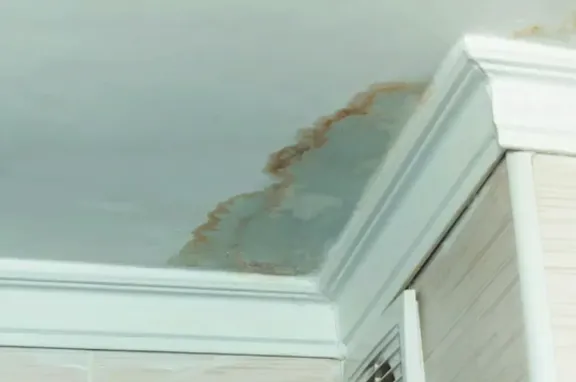
A brown ring on the ceiling or a soft spot on a wall means the drywall's paper face has already given up, and painting over it never fixes that, the stain just bleeds back through. Hartford Elite Drywall removes the damaged board, works a moisture meter across the surrounding area because water travels along joists and pipe runs further than the stain shows, and confirms the leak source is actually resolved before anything goes back up.

What comes next depends on what's behind the panel. Dry, clean framing gets a straight reinstall. Framing with mold on it means we stop, document it, and bring in a Connecticut-licensed remediation contractor, and the wall stays open until an air-quality clearance passes, because closing over active mold just moves the problem out of sight. Where the setting calls for it, below-grade rooms, riverfront homes, a history of water intrusion, we reinstall with moisture-resistant board: USG Sheetrock PURPLE, Gold Bond eXP, or CertainTeed GlasRoc, finished to a GA-216 Level 4 standard and texture-matched so the repair doesn't read under paint.

Hartford's water damage runs on a calendar. Burst pipes cluster in the January and February freeze, when a hard cold snap splits a line in an exterior wall or an unheated space. Spring brings the second wave, Connecticut River high water and snowmelt pushing into low-lying and riverfront basements, and into the pre-1940 housing stock across Frog Hollow, the West End, Asylum Hill, and Parkville, where original plumbing and aging roofs fail on their own timeline.

Hartford is also the insurance capital, and a lot of that water damage comes with an open claim attached. We document the scope the way Connecticut adjusters expect and coordinate directly with them, and for landlords handling a unit-above leak in a majority-renter building, we document the repair to support a building or HOA claim too. The board is only ever the visible part of the job. What's actually behind it, dry framing, wet framing, or something growing on it, is what decides how the rest goes.
Get your water damage scoped

Plaster Repair & Plaster-to-Drywall Conversion

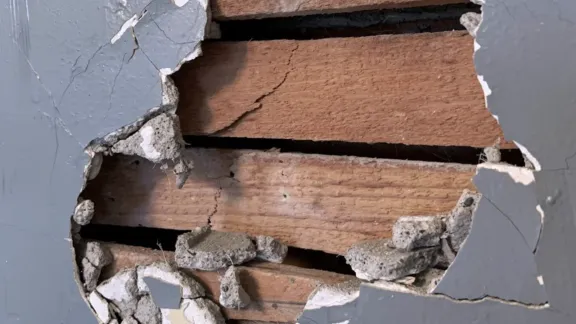
Plaster failure is one of the most common wall problems in Hartford's older neighborhoods, and one of the least well served, because most drywall crews treat every old wall as something to tear out. Hartford Elite Drywall taps and inspects first, mapping where the plaster is still keyed to the wood lath behind it and where it has let go, before recommending repair or conversion. Sound plaster gets stabilized: washers re-secure a sagging or loose field, cracks are cut open and reinforced rather than just filled, and the surface is re-skimmed flat. Plaster that has failed too widely gets converted to drywall, furred out to match the thickness of the original plaster so the deep casing and baseboard reveals on a West End Victorian or Foursquare stay intact rather than going shallow. Either path finishes with the transition skimmed and feathered until it disappears into the surrounding original surface. This decision comes up constantly across Frog Hollow, the West End, Asylum Hill, Parkville, and Barry Square, in Old Wethersfield's historic core, and in the older sections of West Hartford and New Britain, wherever pre-war plaster-and-lath construction is the norm rather than the exception. Because pre-1978 plaster paint almost always contains lead, the work follows lead-safe practices as a matter of course, and because removal is dusty, the work area gets contained and protected. Whether it is one recurring crack, a sagging ceiling, or a full room heading into a renovation, the value is in getting an honest read on what the plaster actually needs, repair or replace, rather than a default answer either way.

Get the right call

Drywall Repair & Patching

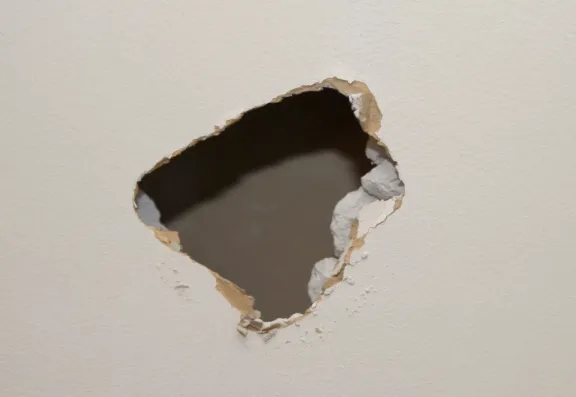
Drywall damage is the most ordinary problem a Hartford home has: a doorknob punched through the wall, anchor holes left where a shelf used to hang, nail pops bulging through last year's paint job, a corner the movers caught on the way in. None of it is urgent, and all of it is the kind of thing that makes an otherwise nice room in West Hartford or Glastonbury look neglected until someone finally deals with it. The value of hiring the fix out is a repair you genuinely cannot find afterward, which comes down to two details most patch jobs skip: matching the surrounding texture, knockdown, orange peel, or smooth, so the patch does not read as an island, and priming every repair so it does not flash a duller or shinier spot under the first coat. Feathering the compound in thin coats that fade into the wall is what ties it together. The method changes with the damage: a pinhole gets filled and taped, a doorknob hole gets a backed or cut-in patch, a crushed outside corner gets the bent bead cut out and replaced rather than mudded over. Nail and screw pops, the most common callback in the trade, only stay fixed if the loose fastener underneath gets re-secured, which matters more here than in a mild climate, because Hartford's winter freeze-thaw cycle keeps moving the framing that pushed the fastener out in the first place. One more local wrinkle worth checking before any of this applies: a lot of Hartford's older housing stock in Frog Hollow, the West End, Asylum Hill, and Parkville is plaster on wood lath, not drywall, and it fails and repairs differently, so we tell you which you have before we start. Individually these are small jobs, and most homeowners bundle several into one visit to clear a backlog before a repaint, a move, or a sale, the same craft that scales up into the turnover and pre-sale work landlords and sellers rely on.

Make your patch disappear

Ceiling Repair

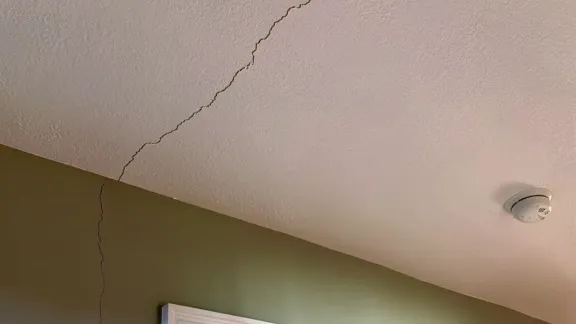
A water stain, a crack that keeps coming back, or a ceiling section that has started to sag all read as one problem to the homeowner: something is wrong overhead. Hartford Elite Drywall treats them as different problems with different causes and diagnoses which one it is before touching a trowel. Painting over a stain without sealing it just lets the stain bleed back through, and skimming a fresh coat over a sagging ceiling covers up a real structural question instead of answering it.

The repair follows the cause. A resolved leak gets sealed with a stain-blocking primer and finished. A section that got truly wet gets cut out and replaced, backed properly, and checked for mold before it is closed up. A sagging drywall panel gets re-secured to the joists or replaced. A sagging plaster ceiling, common across Hartford's older housing stock, gets re-secured to the lath or cut back to sound material, because a plaster ceiling that has lost its keys is holding weight it was never meant to hold. Cracks at the wall-ceiling joint or across a plaster field get cut out and re-taped rather than filled over, which is what lets them come back every season. Every repair is feathered wide, texture-matched, and primed so the ceiling reads as one surface under raking light, the least forgiving light in the house.

Hartford's pre-1940 plaster stock, in Frog Hollow, the West End, Asylum Hill, Parkville, and Barry Square, ages differently than the mid-century drywall ceilings common in West Hartford, Newington, and Wethersfield, and the repair approach follows the ceiling type rather than a one-size fix. Landlords and property managers turning units across Hartford, East Hartford, and New Britain rely on the same diagnose-and-match approach to clear a walkthrough on schedule.

A ceiling repair that starts from the wrong diagnosis, sealing what should have been replaced, or patching over a sag, tends to come back worse. Getting the cause right the first time is what makes the fix actually hold.

Get your ceiling diagnosed

Mold Drywall Removal & Replacement

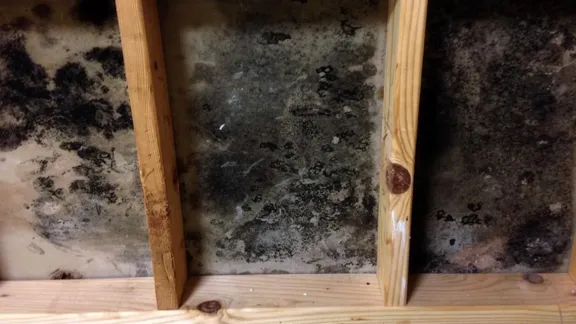
Mold on drywall is a problem people usually try to clean away first, and it usually comes back, because the part that shows on the surface is the smallest part of it. Once mold has taken hold in the paper and gypsum, wiping the surface leaves the colony alive in the material. Hartford Elite Drywall's job is the rebuild that actually solves it: removing the affected board and reinstalling with mold and moisture-resistant drywall, USG Sheetrock Mold Tough and PURPLE, CertainTeed GlasRoc, National Gypsum Gold Bond XP, wherever the conditions call for it.

The sequence matters as much as the material. For limited, contained growth, removal and replacement can happen directly. Where contamination is significant, a qualified remediation contractor contains and treats the area and passes an air-quality clearance test first, and the rebuild waits for that clearance. Hartford Elite Drywall does not perform remediation itself; it coordinates the schedule so the two trades connect instead of leaving a homeowner to manage them separately, and it flags the moisture source, a leak, poor grading, a failed sump, weak basement ventilation, so the cause gets corrected and the mold does not just grow back on the new board.

Hartford's high water table along the Connecticut River, its humid summers, and its aging pre-war housing stock in neighborhoods like Frog Hollow and the West End make basement and below-grade mold a recurring story here. Add Connecticut's residential property condition disclosure, which makes mold a reportable issue at resale, and a documented, properly sequenced repair becomes worth more than a quick cover-up, for homeowners, landlords, and sellers alike. What that documentation covers, and what a job like this typically runs, is the next thing worth knowing.

Stop the mold returning

Popcorn Ceiling Removal

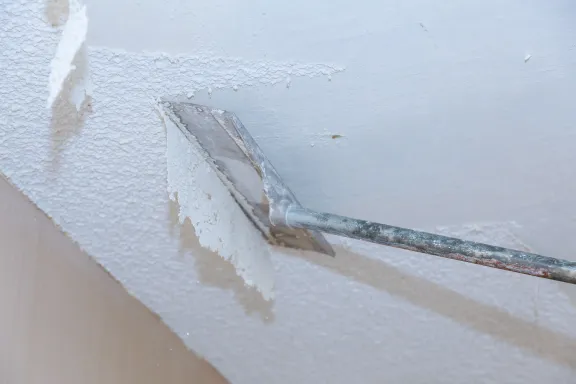
A popcorn ceiling gives a house away instantly: yellowed, dusty, catching cobwebs, hiding whatever cracks or stains sit underneath it. Hartford Elite Drywall takes it off and finishes the ceiling smooth, or to a new texture if that's the preference, but the first question on any home built or textured before 1980 is asbestos, not scheduling.

We test before we scrape. Acoustic ceiling texture applied through the early 1980s can contain asbestos, and disturbing it without knowing is the one way to do this job wrong. A negative test clears the way for standard removal; a positive one means a licensed asbestos abatement contractor handles the material first, under EPA and CT DEEP rules, and we refinish after clearance, or cover the ceiling with new drywall instead. Once the texture is confirmed safe and off, unpainted areas get wet-scraped to keep dust down, while painted popcorn, which resists wet-scraping because the paint seals it, gets skim-coated over instead. Whatever the texture was hiding, cracks, old water stains, prior patches, gets repaired and sealed before the ceiling is skim-coated, sanded, and finished to a GA-214 Level 4 or Level 5 standard and primed paint-ready.

The post-war suburban ring carries the heaviest volume: Newington, Wethersfield, Manchester, Rocky Hill, Berlin, and the Farmington Valley towns are full of 1950s through 1970s ranches, capes, and colonials where popcorn texture went up by the roomful. Spring listing season pulls a second wave, sellers across the metro modernizing ceilings before photos go up. Whether the job is one room or a whole house, what happens with the texture, tested, contained, and finished right, is what separates a clean result from a problem that resurfaces later.

Get your ceiling tested

Basement Drywall Finishing

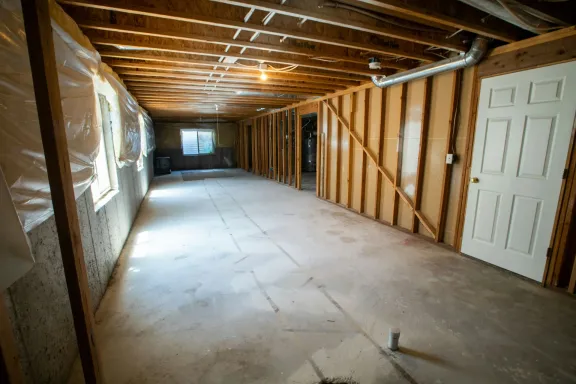
A finished basement is the cheapest square footage a homeowner can add in the Hartford area, since the foundation and roof already exist. Across the suburban ring, Glastonbury, West Hartford, Farmington, Avon, Manchester, and South Windsor, colonials and ranches sit on big unfinished basements that could become a family room, a home office, a gym, or an in-law suite, and the drywall stage is where that framed box starts to read like part of the house.

Moisture is what makes a basement different from any other room, so we check for dampness and any history of water intrusion before a sheet of board goes up. Below-grade perimeter walls and damp-prone areas get moisture-resistant board, and genuinely dry space gets standard board. Insulation matters just as much as the board: Connecticut's climate calls for continuous rigid foam against the concrete, air-sealed at the edges, built so the wall can dry rather than trapping moisture behind an interior vapor sheet, a mistake common in older finished basements around Hartford.

Finishing a basement requires a building permit in Connecticut, which works in the homeowner's favor. It means the space meets code for egress, fire separation at the furnace room, stairway, and any attached garage, and insulation, protection that matters at resale as much as it does on move-in day. We work inside the permitted plan and coordinate with the town inspection sequence, whether that is Glastonbury, West Hartford, Farmington, or Manchester.

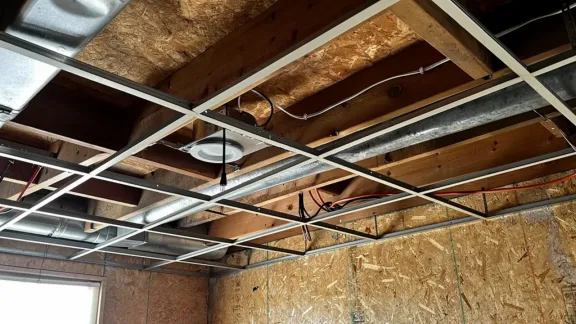
The ceiling is a real decision, not an afterthought. A drywall ceiling reads seamless like upstairs, while a suspended grid keeps plumbing valves and wiring accessible, and plenty of basements land on drywall with access panels at the key spots. For a media room, office, or guest suite that needs quiet, soundproofing assemblies get built in from the start rather than added later.

Finish it, built to code

Drywall Installation & Hanging

A room addition framed and waiting, a gutted space down to the studs, a new build or accessory dwelling unit reaching the point where it needs to be closed in: this is the stage where a construction site starts becoming a finished room, and where a surprising amount of the final quality gets decided before anyone notices. Hartford Elite Drywall handles the full install across Hartford and the surrounding towns, from West Hartford and Glastonbury to South Windsor and the Farmington Valley, planning the board by location before the first sheet goes up: moisture-resistant board in bathrooms and damp areas, fire-rated Type X assemblies at the garage and mechanical separations, standard board everywhere dry and unrated. Hanging looks like the rough part of the job, but it is where a clean finish is won or lost. Seams are laid out on purpose to minimize them and keep them off the sightlines, joints are butted tight, the fastener schedule is correct, and backing goes in wherever cabinets, railings, or fixtures will land later. Ceilings go up first, then walls butt to them, and the surface is finished to GA-216 Level 4, or Level 5 where the space calls for it. New construction and larger additions carry more code weight: the garage-to-house and mechanical-room fire separations get inspected before they can be closed in, and Hartford and the surrounding towns run that inspection through the 2022 CT State Building Code, so the sequencing matters as much as the hanging itself. We also run as a residential drywall sub for general contractors and remodelers, on hang-only or hang-and-finish, holding to the schedule so the drywall stage never becomes the thing that stalls the finish trades. Where new work meets an older Hartford home's existing walls, we blend the transition and match the texture so the addition reads like it was always part of the house.

From framing to finish

Drywall Taping & Finishing

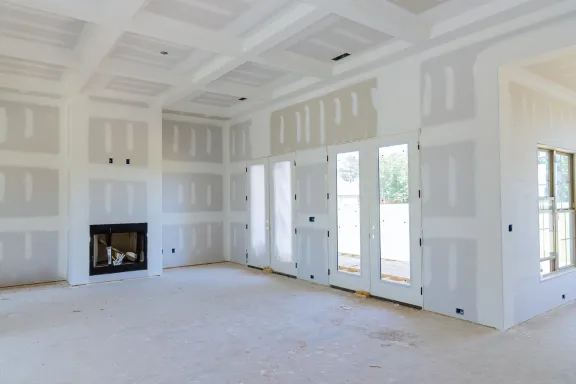
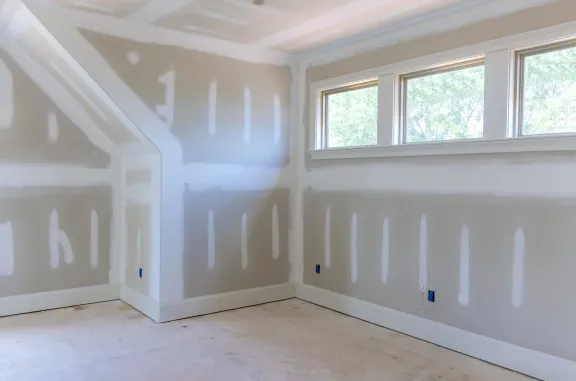
Hanging drywall is the loud part of a project; taping and finishing is the part that decides how the room actually looks once it is painted. Hartford Elite Drywall runs finishing as its own dedicated scope, taping every seam, covering fasteners and corners, and building up joint compound in successive coats with real dry time between them, then sanding to the finish level a project calls for.

Most painted walls need a GA-216 Level 4 finish, taped seams with three coats and fasteners covered, and that is the standard we build to on new construction, additions, and the demising walls and unit partitions coming out of Hartford's office-to-apartment conversions. Where the lighting or paint is more demanding, a west-facing wall of windows, a high-sheen finish, a deep color, we skim the entire surface to Level 5 so the wall reflects light evenly instead of showing every joint. Every wall gets checked under raking light before it is called done and handed off prime-ready.

A lot of the work in this metro is not fresh new construction. In the pre-war stock around West End, Frog Hollow, Asylum Hill, Parkville, and the older homes in Wethersfield, a renovation often means blending new drywall into original plaster or matching a veneer-plaster wall so the repair reads as one surface. We also finish board that homeowners hung themselves in a basement or addition, checking the hang first and correcting anything that would telegraph through before we tape and finish it.

For a general contractor, the value is a finisher who plans around dry time and delivers the same clean result unit after unit on schedule. For a homeowner, it is knowing which finish level the room genuinely needs, and not being sold up to one it does not.

Get a paint-ready finish

Skim Coat & Level 5 Finish

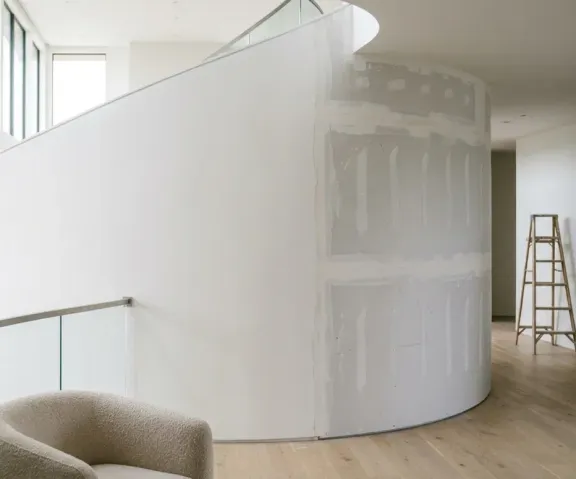
Skim coating is how you get a wall that looks finished rather than merely painted. It means applying a thin, continuous layer of joint compound across an entire surface, not just the seams and fastener heads, to erase imperfections paint will not hide: old texture, patch marks, wallpaper damage, and general wear. A Level 5 finish is the top of the Gypsum Association's GA-214 scale, a full skim over the whole surface so the wall reflects light evenly with no flashing, and it exists for a specific reason. Standard Level 4 finishing, taping and coating only the joints and fastener heads, is perfectly good under most paint and lighting. But under high-sheen paint, dramatic or raking light, or a large unbroken wall near a big window, Level 4 can telegraph every seam and screw line, and no amount of good paint fixes it. That is where Level 5 earns its cost, and being honest about which one a project actually needs is part of the service, not everyone should pay for Level 5.

Hartford's older neighborhoods add a second reason to skim: the plaster. Frog Hollow, the West End, Asylum Hill, Parkville, and Barry Square are built on early-1900s plaster and lath, and sound original plaster with a rough or wavy face does not need to come out. A skim coat resurfaces it smooth while keeping the old wall and its trim reveals. A great smooth finish is built in thin layers, never one thick pass. We protect and contain the room, prep the surface, stabilizing plaster, repairing torn wallpaper backing, knocking down failing patches, then apply the first skim across the full surface, sand it, and add thin coats as the finish level requires, sanding between each. The last step before paint is inspecting under raking light to catch anything that would flash, then priming, often with a high-build primer-surfacer for Level 5. This premium-finish work concentrates in West Hartford, the Farmington Valley towns of Farmington, Avon, Simsbury, and Canton, and Glastonbury, and it is a natural next step after plaster stabilization or popcorn removal. The whole point is that the wall reads smooth under the light it will actually live in, not just smooth on paper.

Get a flawless finish

Drywall Crack Repair

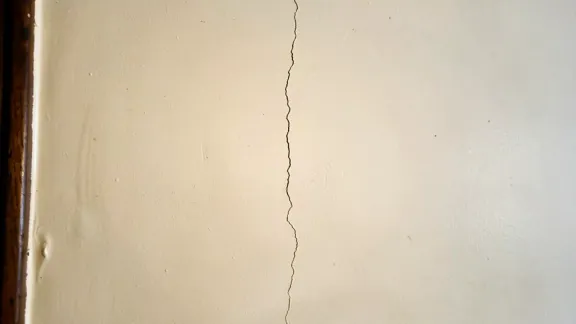
A crack that keeps returning after every repaint is not bad luck, it is a sign the fill never addressed why the crack is there. Hartford Elite Drywall treats the cause: cutting out the failed section of tape, re-taping the joint properly, and using setting-type compound or movement-tolerant materials at the spots that flex the most, rather than bridging a still-moving joint with a rigid dab of lightweight filler. Most Hartford cracks trace to the same handful of stress points, the corners of doors and windows, the seam where wall meets ceiling, and outside corners where the metal corner bead has separated. We treat each differently, re-tape a failed seam with paper or mesh tape embedded properly, remove and reset a separated corner bead instead of skimming over it, and finish with thin coats feathered and texture matched so the repair disappears into the wall. Hartford's older housing stock adds its own wrinkle. Homes in Frog Hollow, the West End, Asylum Hill, and Parkville were often built with plaster on wood lath, and a recurring crack there can be a plaster problem, the plaster keys letting go from the lath, rather than a drywall one. We look at the wall before quoting so the right repair goes on the right surface. Newer builds out in Glastonbury and South Windsor see their own first-year and second-year settling cracks as framing dries out, cosmetic and normal to repair once that settling has largely finished. The bigger question behind any recurring crack is whether it is ordinary seasonal movement or something that points to a structural issue. That distinction changes how the repair should go, and it is worth getting right before a crack gets covered again.

Stop the crack returning

Drywall Texture Matching

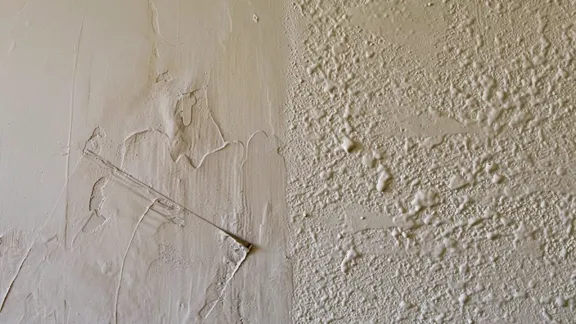
A repair can be finished perfectly flat and still catch the eye, because texture, not flatness, is what makes a patch disappear. Hartford Elite Drywall matches wall and ceiling textures after drywall repairs, water damage work, popcorn ceiling removal, and remodeling, so the finished surface reads as one piece instead of a patch with a border. The work starts with reading the existing surface. Orange peel and knockdown are sprayed on, knockdown then partly troweled flat; splatter varies by coarseness; skip trowel and other hand-applied finishes carry the irregular signature of whoever applied them originally, and take the most skill to reproduce. Getting the type and coarseness right before mixing anything is the difference between a match and a mismatch that no amount of care afterward can fix. Hartford's housing stock makes this call harder than it looks. The pre-1940 plaster common in Frog Hollow, the West End, Asylum Hill, and Parkville is smooth, not textured, which is a different scope entirely, while the machine textures show up in the mid-century and later suburban stock around Newington, Wethersfield, Manchester, and the outer ring towns. Reading the surface correctly, plaster or texture, sprayed or hand-troweled, comes before any mixing starts. Every match gets tested on a sample or a low-visibility spot before it touches the visible repair, then blended in, sometimes corner to corner where a spot repair would otherwise show a hard edge under raking light. Ceilings are the least forgiving version of this work, since overhead light rakes across every ridge and flat and makes a close-but-not-quite match obvious from across the room. Texture matching is often the last step of a bigger repair, but it is also a common standalone call when a previous patch, whether a DIY attempt or another contractor's work, never blended in the first place. Either way, the test is the same: stand back, let the light hit the wall, and the work should be invisible.

Get a seamless match

Drywall Removal & Demolition

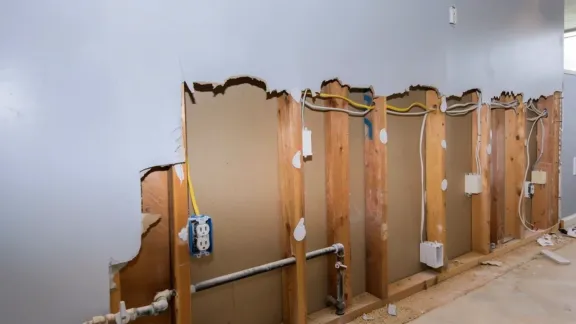
A remodel, a mold repair, or simply walls that need opening for an electrician all start the same way: the existing drywall or plaster has to come out first. Hartford Elite Drywall handles that removal and demolition phase, from selective openings for trade work to a full room or whole-house strip-to-studs gut.

Hartford's housing stock makes this two different jobs depending on the address. Newer walls are straightforward modern drywall, board and screws, relatively light debris. Homes in Frog Hollow, the West End, Asylum Hill, and Parkville are more often original lath-and-plaster, a heavier, dustier material that fills a dumpster far faster and demands more careful handling to come down clean. Because so much of that housing predates 1980, we treat old joint compound, textures, and pre-1978 paint as materials to test before disturbing, not tear into blind. Asbestos and lead are only a hazard once they're broken into dust, which is exactly what demolition does if it's rushed.

Once materials are cleared, the work is about control: identifying the wiring and plumbing that stays live behind the wall, containing dust so it doesn't migrate through an occupied home, and removing board, lath, and fasteners without gouging the framing or finishes meant to stay standing. Debris is hauled and disposed of as part of the job, not left behind for the homeowner to deal with. Larger or structural scopes can trigger a City of Hartford Building Department permit, and we plan for that where it applies.

For a lot of projects, removal is only the first phase. The same crew that opens the wall can be the one that closes it back up, whether that means new drywall or a plaster-to-drywall rebuild.

Get a removal quote

Soundproof Drywall

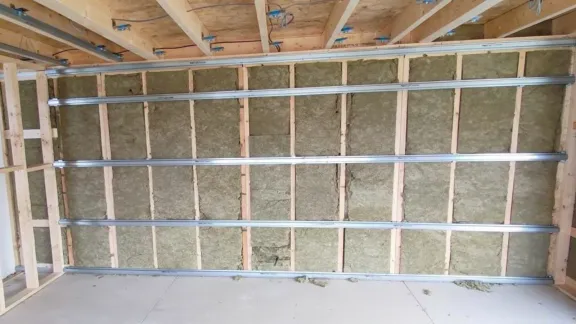
A shared wall that carries every word from next door, or a home office where the calls keep getting interrupted, is usually a sign the wall was built to hold up the house, not to hold back sound. Hartford Elite Drywall builds soundproof drywall as a complete assembly rather than a single product swap. Depending on what you're fighting, airborne noise like voices and television, or impact noise like footsteps and dropped objects, we combine sound-damping board such as QuietRock, resilient channel or isolation clips to decouple the drywall from the framing, mineral wool insulation in the cavity, and acoustic sealing at every outlet, door, duct, and edge. Skipping the sealing is the single most common reason a soundproofing job underperforms, so we treat the flanking paths as part of the build, not an afterthought.

Hartford's mix of remote insurance, state government, and hospital-system workers building real home offices, downtown buildings converting into apartments, and older houses in Frog Hollow, Asylum Hill, and Parkville long ago cut into flats, all share the same problem, walls that predate today's expectation of quiet. New Connecticut multi-family construction targets a party-wall sound minimum of roughly STC 50, but plenty of the region's converted and mid-century buildings fall well short of that, and a minimum was never meant to feel quiet. We set a realistic STC target for your room and build only the assembly that goal needs, whether that's a suburban media room in Glastonbury or Simsbury, a party wall in a converted multi-family, or a demising wall in one of downtown's new office-to-apartment units.

We're upfront that soundproofing reduces sound substantially, it does not erase it, and we'll tell you exactly what to expect before work starts. What that assembly looks like for your specific wall, ceiling, or budget is where the real answer starts.

Get your soundproofing assessed

Garage Drywall & Fire Separation

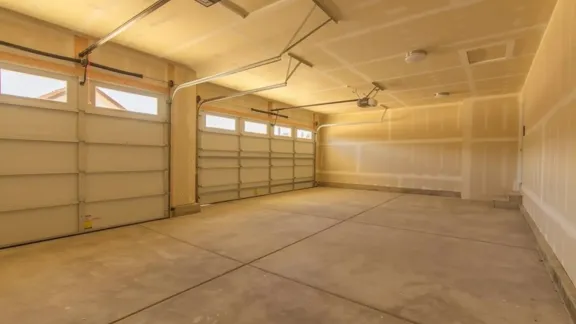
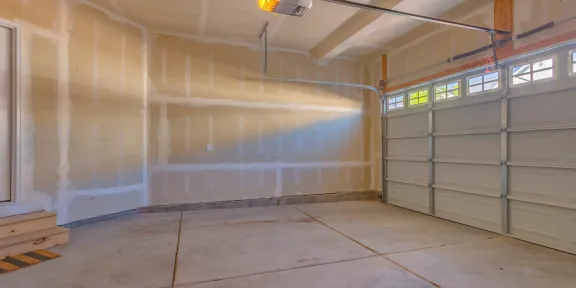
Garage drywall is the one place a Hartford-area homeowner runs into a code fire assembly without meaning to. The wall and ceiling an attached garage shares with the living space, and the ceiling under any room above the garage, are a required fire separation under IRC R302.6 as adopted by the 2022 Connecticut State Building Code, and that is what sets this apart from ordinary drywall: it is a code assembly, not just a wall surface. The garage-side minimum is half-inch gypsum, stepping up to 5/8 inch Type X on the ceiling wherever there is living space above, common in the newer colonial stock around Glastonbury, South Windsor, and Farmington. The board only does its job if it is continuous, so we cover the required surfaces fully, tape the seams, and treat every penetration so there is no gap for fire or smoke to get around. Most homeowners meet this requirement one of two ways. The common one is a pre-sale inspection: a Hartford-area inspector flags an attached garage with bare studs, missing board, or an inadequate separation, and it has to be corrected before closing. The other is a garage being finished or converted for a shop, gym, or living space. How far you take it is your call. If you just need to satisfy the code, common for a seller clearing a flagged item, we install the rated board and fire-tape the seams to a continuous, compliant barrier and leave it ready to pass. If you want a finished-looking garage, we take it further to a smooth, paint-ready Level 4. And if the garage is becoming living space, the separation is one piece of a larger scope, insulation and a full finish, handled through our installation work. This is planned work across the Hartford suburban ring, and it often arrives with an inspection deadline attached. Whatever the goal, the non-negotiable part stays the same: the right board, full coverage of the required surfaces, and a barrier continuous enough to do what it is there for.

Pass the garage inspection

Fire-Rated Drywall Assembly

A fire-rating schedule on the drawings puts rated partitions, corridors, and shaft enclosures on the critical path for cover inspection and the certificate of occupancy, and the GC or developer buying that work needs a sub who builds to the tested UL assembly, not just fire-rated board. Hartford Elite Drywall reads the rating schedule against the plan, confirms the listed detail for each wall (Type X or Type C board, layer count, stud gauge, fastener schedule), and frames and finishes 1-hour and 2-hour partitions, corridors, stair enclosures, and shaft walls built from C-H stud and gypsum shaft-liner panel. Every penetration and joint, including the head-of-wall where the partition meets the deck, gets the correct listed firestop system so the rating stays continuous through inspection, not just on paper.

That work runs across Hartford's commercial and adaptive-reuse pipeline: office and insurance-core tenant improvement around the downtown core, the office-to-apartment conversions turning obsolete towers into housing, where a change of occupancy from Business to Residential rewrites the demising-wall and corridor rating schedule from scratch, medical renovations near Hartford HealthCare and Trinity Health Of New England, and government and municipal buildings across the capital. Property managers and condo associations in the West End, Asylum Hill, and Parkville call when an existing demising wall or corridor needs to be verified or upgraded to code, and design teams want a sub fluent in UL listings and firestopping, not one assuming Type X alone makes a rated wall.

Framing, firestop, and cover inspections are sequenced with the Hartford building department, the relevant town, or the Office of the State Building Inspector on state-owned work, so a rated wall does not have to be reopened to fix what was missed.

Get your fire rating quoted

Metal Stud Framing & Commercial Drywall

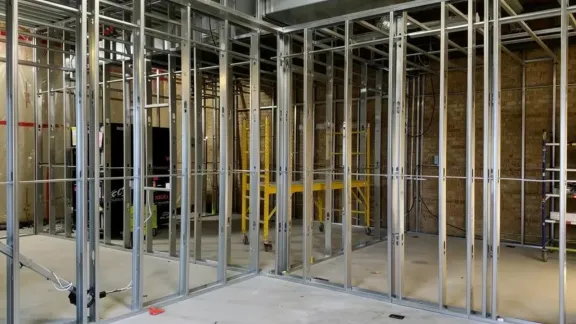
Metal stud framing and commercial drywall is the structural-interior layer of a Hartford fit-out, and it is most of what determines whether the interior comes together on schedule. The scope is the backbone of the job: cold-formed light-gauge steel stud partitions and demising walls, soffits and bulkheads, and drywall ceilings, laid out from the drawings, framed with the correct stud gauge and spacing, backed for casework and wall-mounted equipment, then boarded, taped, and finished to the specified GA-216 level. It is the base scope that rated, abuse-resistant, and clinical assemblies build on, layered onto the same framing run wherever the wall-type schedule calls for them, and it is most of the linear footage in any office reconfiguration, medical suite, or apartment conversion in Hartford. Hartford's demand runs on two engines: steady tenant improvement in the insurance-capital downtown core and the suburban office parks, and the city's active office-to-apartment adaptive-reuse pipeline, where obsolete towers are converted floor after floor into demising walls and unit partitions. What a general contractor is actually buying, though, is reliability on the critical path. The drywall sub sits between framing and the finish trades, so an unreliable one costs a GC far more than the bid difference, in blown schedules and re-coordination. We provide itemized sub bids and take-offs so there are no scope surprises, coordinate framing and cover inspections with the Hartford Building Department or the relevant town so cover-up never gets ahead of sign-off, and turn space over flat, clean, and paint-ready on schedule. We carry CT DCP registration, provide a COI on request, and bond where the project requires it. This is the base commercial work across downtown Hartford, the Bloomfield and Windsor corporate campuses, the Rocky Hill and Cromwell office parks, and the Farmington Valley and Buckland retail corridors. For a GC building out tenant after tenant, or a developer converting floor after floor, that predictability is the product.

Frame your Hartford fit-out

Suspended / Drop Ceiling Installation

A reconfigured office floor, a rusted or sagging grid, or ACT tile that has gone water-stained and mismatched all land on the same ceiling phase of a Hartford commercial project. Hartford Elite Drywall installs new suspended acoustical grid, repairs and replaces failed grid and tile, and integrates lights, air diffusers, return grilles, and sprinkler heads into a clean, level ceiling on the fit-out and turnover schedules commercial work runs on.

Layout is what separates a ceiling that reads intentional from one that looks pieced-together. Grid gets laid out off the reflected ceiling plan, centered on the field, with the border tiles balanced so the perimeter cuts are even rather than a full tile on one wall and a sliver on the other. Main runners and cross tees are hung level and square, light fixtures and sprinkler heads are supported independently per code rather than left resting on the grid, and the assembly follows ASTM C635 and C636 to the 2022 Connecticut State Building Code. Washable, sealed-face clinical tile is available where medical, dental, and lab spaces need it, and higher-NRC acoustical tile is available where conference rooms and demised suites need sound control.

Hartford's downtown insurance and corporate offices, the hospital campuses at Hartford HealthCare and Trinity Health Of New England, the state and municipal buildings around the Capitol, and the retail corridors through West Hartford, Manchester, and Farmington all specify different tile and grid for different reasons, and the work is often scheduled after hours or on weekends so an occupied space does not lose a business day. Not every dated ceiling needs a full grid replacement. When the existing grid is level, square, and sound, a tile-only swap is the faster fix, and figuring out which one a space actually needs starts with a walk of the ceiling above it.

Get your ceiling assessed

Get a fast, no-pressure quote

Call or send a few details — we serve Hartford and the surrounding area.

Call (860) 385-8361

Call Now