
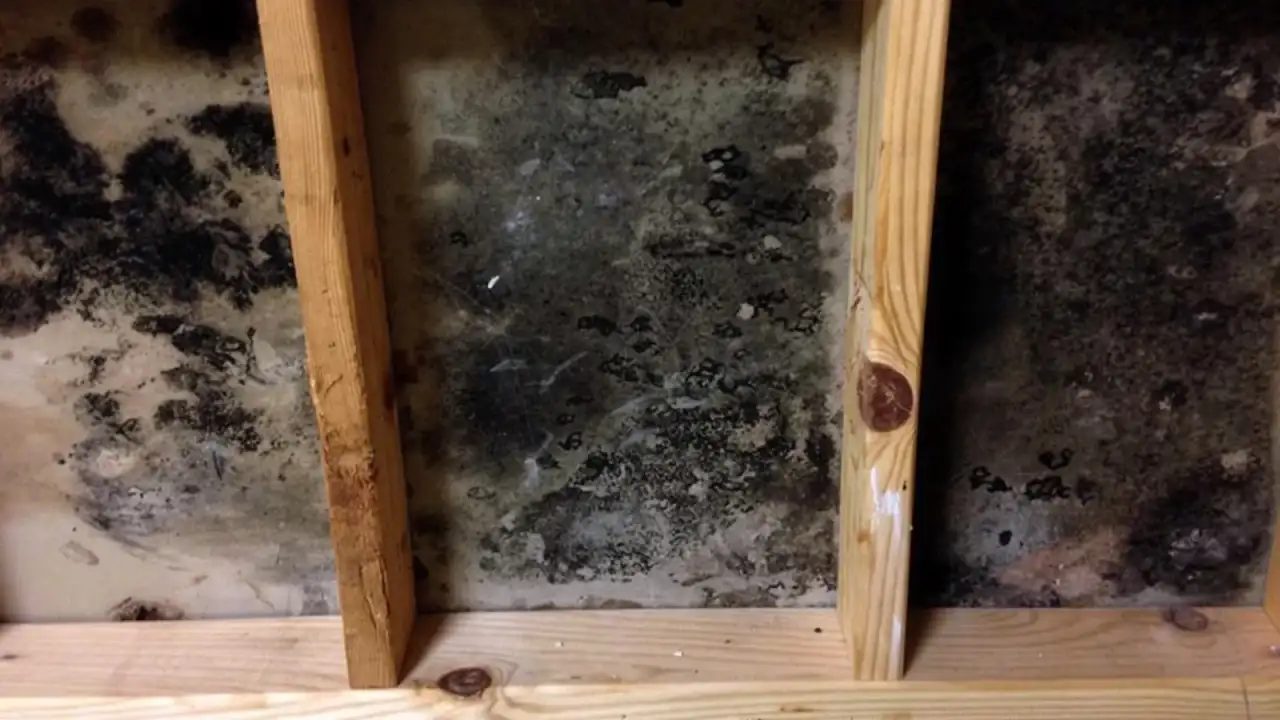
Signs you need this
- • Black, green, or gray mold spots on drywall, most often in a basement, a bathroom, or along a below-grade wall
- • A musty, earthy smell in the basement or a lower level that never fully clears, even after cleaning
- • Drywall that feels soft, spongy, or bulged at the base of a wall, or staining that creeps up from the floor line
- • Mold that grows back within weeks after someone wipes it off or paints over it
- • Allergy-like symptoms (congestion, itchy eyes, a scratchy throat) that ease when the household leaves the house
- • Mold found behind a wall during a remodel, or flagged by a home inspector during a Hartford-area sale
Mold Drywall Removal and Replacement in Greater Hartford
Mold on drywall is one of those problems people try to clean away and then watch return, because the part you can scrub is the smallest part of it. Drywall is paper and gypsum, both porous, so once mold has taken hold in or behind the board, wiping the surface leaves the colony alive in the material. Across Hartford’s older neighborhoods and damp basements, that is a common story: a below-grade wall or a bathroom in a Frog Hollow, West End, Asylum Hill, or Parkville home that keeps growing mold no matter how many times it is cleaned. The city sits over a high water table beside the Connecticut River, its summers are humid, and its pre-war housing stock has aging envelopes that hold moisture. The fix is not cleaning. It is removing the affected board, correcting the moisture that fed it, and rebuilding with materials that resist it.
Where remediation ends and drywall begins
The honest boundary on this work matters, both for your health and for getting it done right. Limited, contained surface growth can often be removed and replaced directly. But where contamination is significant, meaning widespread growth, mold into the framing, or a sizable behind-wall colony, the correct sequence is for a qualified mold remediation contractor to contain the area, treat and remove contaminated material, and pass an air-quality clearance test first. Hartford Elite Drywall does not perform remediation itself. It handles the drywall removal and the rebuild that follows, and it coordinates the schedule so the remediation and the reconstruction connect cleanly instead of leaving a homeowner to manage two trades that do not talk to each other. The rebuild happens only after clearance. A contractor who blurs that line, promising to make the mold disappear with new board over a wet, untreated wall, is one to be wary of.
Why Hartford basements keep coming back, and how to stop it
Mold is a symptom. It grows because there is moisture, and often poor ventilation, and if that source stays, a brand-new wall will grow mold too. In Hartford the source is usually below grade. Foundations near the river and across the older core take on humidity, spring melt raises the water table, and a failed sump or poor exterior grading pushes water toward the wall. Freeze-thaw winters add burst pipes that soak the back of the board before anyone notices. So part of the job is identifying the source and flagging it, a leak, a grading problem, a sump issue, or a ventilation gap, so it gets corrected before the wall is closed. Then the rebuild uses mold and moisture-resistant board (USG Sheetrock Mold Tough, PURPLE, CertainTeed GlasRoc, National Gypsum Gold Bond XP) in the spaces that warrant it. Paperless, fiberglass-mat boards in particular do not give mold the paper face it feeds on, which is why they belong in a Hartford basement or a chronically damp bathroom rather than standard gypsum.
The documentation that matters in Connecticut
In Connecticut, mold and water damage are disclosure issues. An owner selling a home has to report known problems on the residential property condition disclosure, which means a documented, properly executed repair, and remediation clearance where applicable, is what actually satisfies a buyer, an inspector, and the disclosure form. Hartford Elite Drywall finishes the rebuild to a Level 4 standard, matches the surrounding texture, primes it paint-ready, and hands off the scope documentation for the file. For the many landlords and property managers in this majority-renter city, resolving a tenant mold complaint or turning a unit, that same paper trail protects the owner and gives the next tenant a clean wall. The point of doing it this way is simple: the wall comes out clean, the source gets addressed, and the mold does not come back.
Materials & standards
Products & materials we use
- USG Sheetrock Mold Tough / PURPLE (mold and moisture-resistant)
- CertainTeed GlasRoc (fiberglass-mat, paperless)
- National Gypsum Gold Bond XP / eXP (mold-resistant board)
- Georgia-Pacific DensArmor Plus (paperless, mold-resistant)
Standards & codes we work to
- Connecticut residential property condition disclosure (mold and water damage at resale)
- IICRC S520 (mold remediation standard, remediation contractor reference)
- GA-216 (Level 4 finish)
- 2022 Connecticut State Building Code (permit only where structural framing or fire separation is involved)
- Hartford building department permit process (structural scope)
What the terms mean
- Containment / air-quality clearance test
- Paper-faced versus paperless (fiberglass-mat) gypsum
- Moisture source correction
- Surface mildew versus embedded mold
- Below-grade moisture management
- Corrosion-resistant fasteners
Options & variants
| Option | When it applies | Cost |
|---|---|---|
| Limited surface mold removal + replace | Small, contained growth with minimal framing involvement | Lower |
| Coordinated remediation + rebuild | Significant contamination; remediation contractor leads, Hartford Elite Drywall rebuilds after clearance | Higher, sequenced and clearance-gated |
| Moisture/mold-resistant reinstall (PURPLE / Mold Tough / GlasRoc) | Any area with a moisture history: basements, bathrooms, riverfront homes | Material premium, and the right call here |
| Below-grade / basement assemblies | Basement walls with chronic moisture against a foundation | May include detailing to manage future moisture |
| Source-correction coordination | Where a leak, poor grading, or ventilation drives the mold | Adds coordination with other trades |
What affects cost
- • Extent of contamination: limited surface growth versus widespread or behind-wall mold
- • Remediation requirement: significant mold means a remediation step before rebuild, which adds cost and time
- • Framing involvement: mold or rot on studs, plates, or blocking adds treatment or replacement before drywall
- • Board type: mold and moisture-resistant board carries a premium and is the right choice in Hartford basements and baths
- • Location and access: basement corners, behind tubs and showers, and tight below-grade spaces add labor
- • Source correction: fixing a leak, a grading problem, a failed sump, or weak ventilation is separate but necessary to prevent recurrence
- • Documentation: clearance and scope paperwork for insurance, disclosure, or a home sale
- • Area size: the square footage of board removed and replaced
Price ranges
Low end
$800–$1,400
Limited, contained removal plus mold-resistant reinstall, finished to match
Typical
$1,400–$2,200
Larger basement or bath area, or a coordinated rebuild after remediation clearance, with mold-resistant board and finish
High end
$2,200–$3,000+
Significant contamination with a full remediation sequence, framing treatment, multi-area or whole-basement scope, and full documentation
What to expect
- 1
Assessment
Hartford Elite Drywall inspects the affected area, determines whether the growth is surface-level or behind and within the wall, and identifies the moisture source (a basement humidity problem, a Connecticut River flood-zone backup, a plumbing or roof leak, poor grading). If contamination is significant, the company advises that a qualified remediation contractor lead the treatment rather than papering over a problem that needs containment.
- 2
Sequencing with remediation (if needed)
For significant contamination, the remediation contractor contains, treats, and removes contaminated material and passes an air-quality clearance test. Hartford Elite Drywall schedules around that work and does not rebuild until clearance is confirmed.
- 3
Drywall removal
For limited cases, or as the rebuild leg of a larger job, the crew removes the mold-affected board, contains dust, and protects the rest of the home. It checks the framing behind the board.
- 4
Framing and substrate check
Mold or moisture damage on studs and plates is treated or addressed before new board goes in, and any structural need is coordinated with the right trade.
- 5
Source-correction coordination
Mold returns if the moisture source stays. The crew flags a leak, a grading issue, a failed sump, or weak basement ventilation so it can be corrected (by the relevant trade) and the repair lasts.
- 6
Reinstall
New mold and moisture-resistant board (USG Sheetrock Mold Tough / PURPLE, CertainTeed GlasRoc, National Gypsum Gold Bond XP) goes in where the conditions warrant it, with corrosion-resistant fasteners and taped seams.
- 7
Finish and documentation
The wall is finished to a GA-216 Level 4 standard, texture-matched, and primed paint-ready. Hartford Elite Drywall provides documentation of the scope and, where applicable, the remediation clearance for insurance, disclosure, or a home sale file.
When this isn’t the right call
- If contamination is extensive and active, a qualified mold remediation contractor must lead first; Hartford Elite Drywall rebuilds after clearance, not before.
- If it is just a stain with no mold, it may be water damage without growth. That points to water damage drywall repair.
- If the moisture source is not addressed, replacing board without fixing the cause means the mold returns; source correction comes first.
- If it is only surface mildew on painted, well-ventilated drywall, cleaning and better ventilation may resolve it without any drywall work.
- If air-quality or health testing is the real need, that is a mold assessor or industrial hygienist scope, not drywall.
Frequently asked questions
Do you do the mold remediation, or just the drywall? +
Hartford Elite Drywall handles the drywall removal and the rebuild. For significant contamination, a qualified mold remediation contractor should contain, treat, and clear the area first, since that is a health-and-liability specialty. The company coordinates the sequence and rebuilds with new mold-resistant board once the clearance test passes, so you get a clean, finished wall without managing two disconnected trades.
Why does my Hartford basement keep growing mold? +
Because the moisture source is still there. Hartford sits over a high water table near the Connecticut River, and older basements take on humidity through the foundation, from spring melt, and from summer dampness. Mold is a symptom of that moisture, so the crew flags the source and rebuilds with mold-resistant board, but if the humidity or leak is not corrected, any wall will grow mold again.
Can't I just clean the mold off and repaint? +
If it is true surface mildew on painted, ventilated drywall, sometimes. But drywall is paper and gypsum, both porous, so once mold has grown into or behind the board, cleaning the surface leaves the colony in the material, which is why it comes back. Mold-affected drywall is replaced, not cleaned.
Is mold-resistant drywall worth it in a Hartford basement? +
In damp, mold-prone spaces, yes. Paperless, fiberglass-mat boards like CertainTeed GlasRoc and moisture-resistant boards like USG Mold Tough and PURPLE do not give mold the paper face it feeds on. In Hartford's humid basements, riverfront homes, and older baths it is the right call, not an upsell.
I'm selling my house and mold was flagged. What do I need? +
A documented repair. Connecticut's residential property condition disclosure makes mold and water damage a reportable issue, so a clean replacement with documentation, plus remediation clearance where applicable, is what satisfies a buyer, an inspector, and the disclosure form. Hartford Elite Drywall leaves you the paperwork for the file.
A pipe burst this winter and now there's mold behind the wall. Is that covered? +
Freeze-thaw pipe bursts are common in Hartford winters, and the resulting water often grows mold on the back of the board before anyone opens the wall. Sudden, accidental water damage is frequently a covered claim, and documented scope and clearance help the claim. The company coordinates the rebuild and provides that documentation, though coverage is between you and your insurer.
How long does it take? +
Limited cases can be a day or two. When remediation has to lead, the overall timeline follows the remediation contractor's containment and clearance schedule; the rebuild then runs about two to four days with dry time between coats. The work is coordinated so there is no idle gap.