
Signs you need this
- • Old plaster walls that read rough, wavy, or bumpy under daylight, with prior patches and skim lines showing through
- • Walls that look patchy or uneven where low-angle light rakes across them from a window or a sconce
- • Damaged paper and torn drywall face after wallpaper comes off an old Hartford-area home
- • Visible seams, fastener spots, or "flashing" where a painted wall reflects light unevenly
- • A high-end renovation or high-sheen paint plan where every imperfection will show
- • Dated texture (light knockdown, sand-finish plaster, orange peel) the homeowner wants gone for a modern smooth look
- • Walls that look "okay" but not the flawless finish a designer or a quality renovation calls for
Skim Coat and Level 5 Finish for Hartford Homes
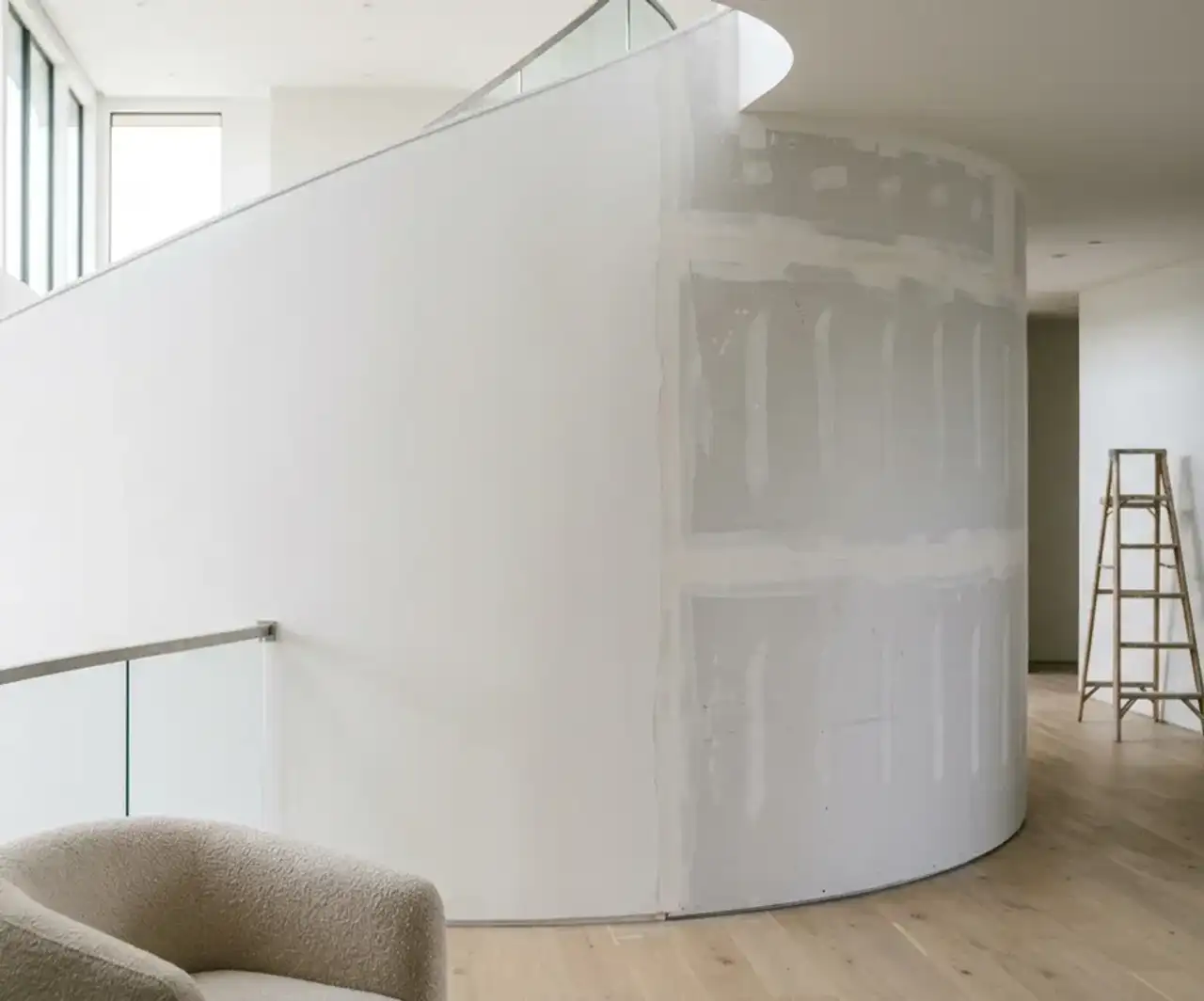
There is a difference between a wall that has been painted and a wall that has been finished, and you usually notice it in the light. A flat, flawless wall reflects light evenly and disappears; a wall with finished seams but a bare surface between them shows faint shadows and sheen changes, called flashing, wherever the light rakes across it. Most rooms never need to worry about that. But in a high-end renovation, under the big windows of a West Hartford colonial, or beneath a coat of gloss or deep-color paint, every imperfection announces itself. That is the gap a skim coat and a Level 5 finish close, and in the higher-value Hartford suburbs, West Hartford, Farmington, Avon, Simsbury, Canton, and Glastonbury, it is a standard that designers and homeowners actually ask for.
Skim coat vs. Level 5, and which you actually need
A skim coat is the technique: a thin, continuous layer of joint compound spread over a whole surface to smooth out texture, patches, and damage that paint cannot hide. A Level 5 finish is the standard at the top of the Gypsum Association scale (GA-214), where that skim covers the entire wall, not just the taped seams and the fastener heads as a standard Level 4 does, so the surface reads perfectly uniform under any light. The honest version of this conversation matters. Level 4 looks excellent under matte and eggshell paint in normal light, and most walls are fine with it. Level 5 earns its cost specifically when high-sheen paint or critical lighting would otherwise reveal the difference. We look at your walls under the room’s real lighting and tell you which level the situation calls for, instead of defaulting everyone to the most expensive answer.
Resurfacing rough old plaster to smooth
Hartford’s pre-war neighborhoods are built in plaster on lath. Frog Hollow, the West End, Asylum Hill, Parkville, and Barry Square are full of homes from the early 1900s through the 1930s, and the plaster in them has usually taken a century of patches, paint, and settling. That does not mean it has to come out. Where the plaster is still sound but rough, wavy, or previously papered, skimming is the smartest path to a smooth modern surface: a skim coat resurfaces the wall while keeping the solid old plaster and the deep trim reveals that give an older home its character. If the plaster is loose or keying away from the lath, we stabilize or convert it first, then skim so the repaired and original areas read as one continuous surface. See our plaster page for that side of the work. This resurfacing is the quiet workhorse of the service in Hartford, the reason a smooth finish here is as much about old plaster as it is about new drywall.
Where else it shines: wallpaper damage and dated texture
Wallpaper removal is the other classic trigger. Pulling paper off an older Hartford wall almost always tears the paper face of the drywall underneath, or leaves adhesive and gouges that paint will magnify rather than hide, and skimming is what turns that mess back into a wall you would want to paint. Dated texture is the third: a light knockdown, an old sand-finish plaster, or an orange peel that reads out of step with a modern renovation can be skimmed flat in a smooth-over. Each of these ends the same way, with a continuous surface that takes paint evenly.
How a flawless finish is actually built
A great smooth finish is built in thin layers, not one thick pass. We protect and contain the room, prep the surface by stabilizing plaster, repairing torn paper, and knocking down failing patches, then apply the first skim coat across the full surface, sand it, and add additional thin coats as the finish level requires, sanding between each. The last step before paint is inspecting under raking light to catch anything that would flash, then priming, often with a high-build primer-surfacer for Level 5 so the topcoat lays down dead even. The whole point is that the wall you hand off looks smooth under the light it will actually live in, not just smooth on paper.
Materials & standards
Products & materials we use
- USG Sheetrock All Purpose / Plus 3 / Tuff-Hide (high-build Level 5 primer-surfacer)
- National Gypsum Gold Bond and CertainTeed topping compounds
- Level 5 primer-surfacers (roll-applied skim alternative)
Standards & codes we work to
- GA-214 (Gypsum Association recommended levels of finish 0–5; Level 5 = full skim)
- ASTM C840 (application and finishing of gypsum board)
- CT DCP Home Improvement Contractor (HIC) registration
What the terms mean
- Skim coat / skim coating; full-surface skim
- Level 4 versus Level 5 finish
- Flashing / photographing (uneven sheen under light)
- Critical lighting / raking light
- Feathering; high-build primer-surfacer
- Smooth-over (texture to smooth); plaster resurfacing
- Plaster and lath; veneer plaster / blueboard
Options & variants
| Option | When it applies | Cost |
|---|---|---|
| Spot skim / repair blend | Localized damage or patches needing blending into the surrounding wall | Lower — targeted area |
| Full-wall skim (smooth-over) | Textured or lightly damaged walls to be made smooth | Mid — full surface, single area |
| Whole-room Level 5 | Critical lighting, high-sheen paint, premium renovation | Higher — entire room to the highest standard |
| Skim over old plaster (resurfacing) | Rough, wavy, or previously patched original plaster to be made smooth | Mid — restores plaster to smooth without replacement |
| Post-wallpaper-removal skim | Torn paper face or adhesive damage after wallpaper | Mid — repair plus skim |
| Texture-to-smooth conversion | Removing dated wall or ceiling texture by skimming | Mid–higher depending on texture depth |
What affects cost
- • Surface area — square footage of wall or ceiling skimmed; whole room versus one wall
- • Finish level — a full Level 5 is more labor than a smooth-over skim
- • Existing condition — heavy damage, deep texture, torn paper, or badly patched plaster needs more prep and more coats
- • Number of coats — a flawless finish requires multiple thin coats with sanding between each
- • Plaster versus drywall substrate — rough or loose old plaster may need stabilizing or extra prep before skimming
- • Lighting and sheen requirements — critical lighting and gloss paint raise the standard, and the labor with it
- • Access — high walls, stairwells, and vaulted ceilings in older homes
- • Occupied home — dust containment and protection in lived-in rooms
Price ranges
Low end
$1,200–$1,900
Single wall or modest room, smooth-over skim, prime
Typical
$1,900–$2,800
Full-room skim or Level 5 on a feature space, multiple coats, prep
High end
$2,800–$4,000+
Whole-room or multi-room Level 5, heavy plaster prep, critical lighting, high walls
What to expect
- 1
Assessment and lighting check
We look at the walls under the room's actual lighting, since light is what reveals or forgives imperfection, and confirm the finish level the paint and lighting will demand. We identify damage, texture, and substrate (drywall or plaster).
- 2
Prep and protection
Floors and furnishings are protected and the room is contained for dust. Loose paint, failing patches, and torn paper are addressed, and rough or loose plaster is stabilized where needed.
- 3
First skim coat
A thin, even coat of compound goes across the full surface, filling texture and leveling imperfections.
- 4
Sand and recoat
The coat is sanded smooth, then additional thin coats are applied as the finish level requires, each sanded between, building to a flat, continuous surface. Level 5 means the entire surface carries skim, not just the joints.
- 5
Final sand
The surface is sanded to a uniform, flaw-free finish and checked under raking light to catch anything that would flash after paint.
- 6
Prime
A quality primer, often a high-build or uniform-sheen primer-surfacer for Level 5, so the topcoat lays down evenly. Priming is part of the finish, not an optional extra.
- 7
Handoff
The surface is paint-ready and flat. Under the room's lighting, the wall reads smooth and even, ready for high-sheen or dramatic paint without revealing seams or texture.
When this isn’t the right call
- If the wall is structurally damaged or the plaster is failing off the lath → Skim won't fix failed board or plaster; the surface needs repair or conversion first. See Plaster Repair & Conversion and Drywall Repair & Patching.
- If you want a textured look → Skimming creates smooth; matching or applying texture is a different scope. See Texture Matching.
- If it is just minor patching before standard paint → A standard Level 4 patch may be all you need; a full skim is for smooth or critical-light goals. See Drywall Repair & Patching.
- If popcorn texture is on the ceiling → Removal comes first, then skim. See Popcorn Ceiling Removal.
- If the budget is for flat, low-sheen paint on decent walls → Level 5 may be more than the situation needs, and we will tell you so honestly.
Frequently asked questions
What's the difference between a skim coat and a Level 5 finish? +
A skim coat is the technique, a thin layer of compound spread over a surface to smooth it. Level 5 is the standard: the highest finish on the Gypsum Association scale, where the entire wall gets a skim coat (not just the seams and screws) so it reflects light perfectly evenly. Every Level 5 finish is a skim coat, but not every skim coat needs to reach Level 5. We match the level to your paint and your lighting.
Do I really need Level 5, or is Level 4 fine? +
It depends on the paint and the light. A standard Level 4 finish, with seams and fasteners coated, looks great under flat and matte paint in normal light. But high-sheen, gloss, or dark paint, and rooms with big windows or raking light, will reveal the difference between a finished seam and a fully skimmed surface as flashing. If that is your situation, Level 5 is worth it. If it is not, we will tell you Level 4 is enough rather than upsell you.
Can you skim my rough old plaster walls smooth instead of tearing them out? +
Yes, and in Hartford's older homes that is usually the smartest path. Sound original plaster with a rough, wavy, or previously patched face does not need to come out; a skim coat resurfaces it to a smooth, modern finish while keeping the solid old wall and its trim reveals. If the plaster is loose or failing off the lath first, we stabilize or convert it before skimming. See our plaster page.
I removed wallpaper and the walls are a mess. Can you fix them? +
Yes, and it is one of the most common reasons people call for a skim coat. Wallpaper removal in an older home often tears the paper face of the drywall or leaves adhesive and gouges that paint will magnify rather than hide. We repair the damage and skim the walls smooth so they look new.
Will the smooth finish really show under my lighting? +
That is exactly why we check the walls under the room's actual lighting first and finish to the level it demands, then inspect under raking light before priming. Light is what makes or breaks a smooth finish, so we finish to the light, not just to the spec on paper.
Is skim coating messy? +
There is sanding dust, so we contain and protect the space. It is far less invasive than removal or replacement, and the result, flat and flawless walls, is worth the temporary dust. You can usually work room by room and stay in the home.
Do you work with designers and renovators? +
Yes. A lot of this work comes through interior designers and design-build renovators in West Hartford and the Farmington Valley who need a smooth, dependable substrate for a high-end paint or finish. We finish to the level the design calls for and hand off a wall that is ready for the topcoat.