
Signs you need this
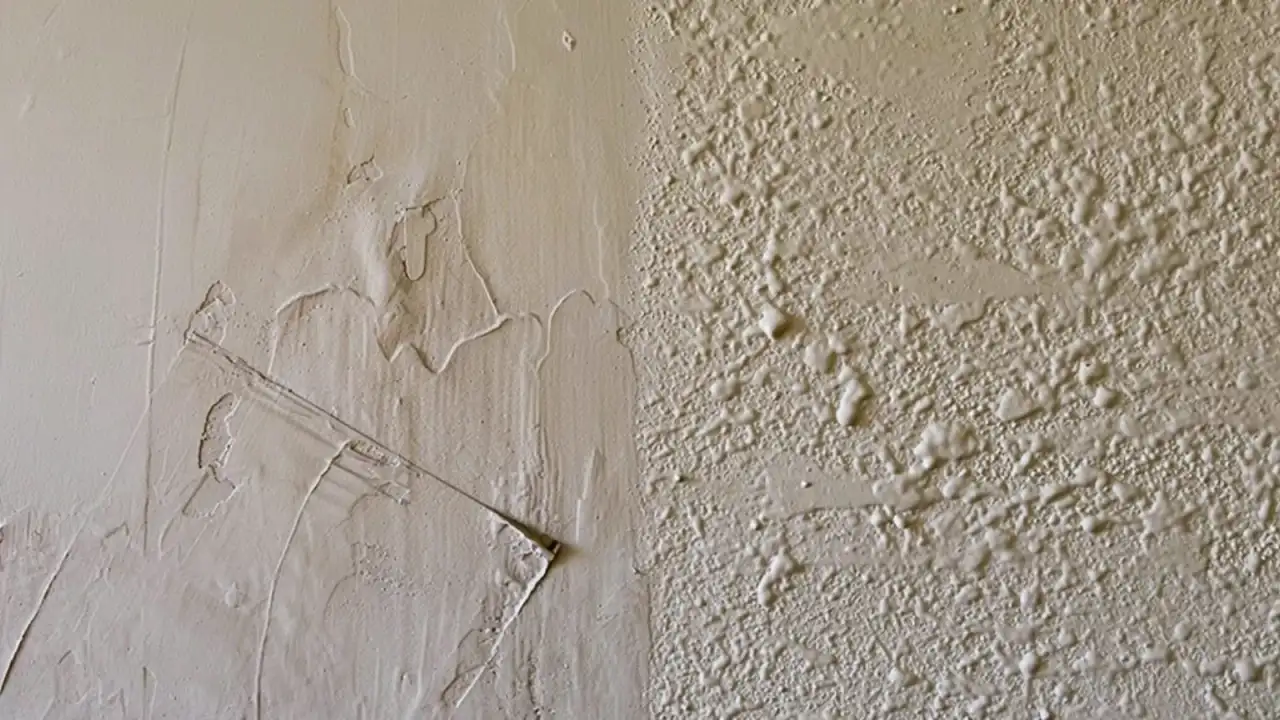
- • A repair or patch that reads smooth while the wall or ceiling around it is textured, so it sits there like an island
- • A new section, replaced panel, or room addition that does not match the existing knockdown, orange peel, or skip-trowel finish
- • A prior repair where someone tried to match the texture and got it subtly wrong, so it stands out under light
- • A textured ceiling patch that looks obviously different from a few feet away, especially with overhead light raking across it
- • A water-damage or plumbing repair that was closed up flat and never re-textured to match the rest of the surface
Drywall Texture Matching in Hartford
A repair is only as good as the way it blends, and on a textured wall or ceiling, blending means matching the texture. This is the part of drywall work Hartford homeowners consistently underestimate, because it looks like a finishing afterthought and is actually a distinct skill. You can finish a patch perfectly flat and it will still read as a repair if the wall around it is orange peel or knockdown and the patch is smooth. The eye locks onto a texture mismatch under raking light faster than almost anything else in a room. Most of the calls for texture matching come down to one sentence: the patch shows because the texture does not match.
Where texture actually lives in Hartford homes
It helps to know which surfaces are textured in the first place. Much of Hartford’s core housing, the pre-1940 stock in Frog Hollow, the West End, Asylum Hill, and Parkville, is smooth lath-and-plaster, which is a plaster or skim-coat scope rather than a texture match. The machine textures show up in the mid-century and later suburban builds, the 1950s to 1970s ranches and colonials around Newington, Wethersfield, Rocky Hill, Manchester, and the outer ring towns, where orange peel and knockdown walls and textured ceilings are common. Reading the surface correctly is the first decision, because matching texture on a wall that was never textured is the wrong job entirely.
Reading the texture before touching it
Every texture is a recipe: a material consistency plus a tool plus a technique. Matching one starts with correctly identifying what is there. Orange peel is a fine spray that looks like its namesake. Knockdown is that same spray, then troweled partly flat. Splatter ranges from fine to coarse. Skip trowel and other hand-troweled finishes are applied by hand and carry the irregular signature of whoever originally did them. Each needs a different approach, and getting the category wrong guarantees a mismatch that no amount of care fixes afterward. We read the existing texture, both type and coarseness, before we mix anything.
The step that separates a match from a guess
The single discipline that makes texture matching work is testing before committing. We mix the compound to the right consistency and test the spray pressure or the trowel technique on a sample board or a hidden spot, compare it to the existing surface, and adjust until it reads the same, and only then apply it to the visible repair. DIY attempts and rushed jobs skip this and apply straight to the wall, which is why so many patches end up looking worse than the original damage. Hand-applied textures take the most testing because they are the least mechanical, and an old, worn skip-trowel finish might take a few passes to read correctly. Once the match is dialed in, we feather and blend it into the surrounding area, and where a spot repair sits in open wall with no natural break, we blend corner to corner so there is no hard edge to catch the light.
Ceilings, water damage, and the jobs texture finishes
Texture matching is most often the quiet last step of another job. A drywall or ceiling repair, a water-damage reinstall (Hartford’s Connecticut River exposure and old plumbing keep those steady), or a remodel where new work meets old all end at the same place: the re-textured area has to match the surface around it. Ceilings are the harder version because overhead light rakes across every ridge and flat, so a ceiling texture match that is close but not right will still show from across the room. But texture matching is also a standalone fix for the common, maddening situation where a previous patch, DIY or by another contractor, did not match and now stands out more than the damage would have. Either way the measure of success is simple and unforgiving. Stand in the room, let the light rake across the surface, and you should not be able to find where the work was done. That is the whole job.
Materials & standards
Products & materials we use
- Joint and topping compound thinned for spray texture
- Hopper gun and texture sprayer
- Knockdown knife and trowels for hand textures
- Aerosol texture (small spot matches)
Standards & codes we work to
- GA-216 (underlying finish level before texture)
- CT DCP Home Improvement Contractor registration
What the terms mean
- Orange peel, knockdown, splatter, skip trowel, hand-troweled
- Hopper gun; mix consistency
- Raking light; texture island
- Blending corner to corner
- Test sample before application
Options & variants
| Option | When it applies | Cost |
|---|---|---|
| Orange peel match | Spray-applied fine texture, common on suburban walls | Baseline |
| Knockdown match | Sprayed then troweled partly flat | Mid — two-step |
| Splatter / spray match | Spray textures of varying coarseness | Baseline–mid |
| Skip trowel / hand-troweled | Hand-applied finishes | Higher — skill-intensive |
| Ceiling texture match | Textured ceilings (non-popcorn) | Mid — overhead work |
| Blend large area / re-texture wall | Where a patch cannot be isolated; texture the wall corner to corner | Higher |
What affects cost
- • Texture type — hand-applied finishes take more skill and time than machine sprays
- • Match difficulty — unusual, old, or worn textures take more testing to read and replicate
- • Area — a single patch versus a larger section versus re-texturing a full wall to the corners
- • Blending strategy — sometimes blending corner to corner is the only way to hide a seam
- • Ceiling versus wall — overhead work is slower and less forgiving under light
- • Surface prep — the underlying repair has to be finished correctly before any texture goes on
- • Access and height — high or vaulted surfaces add time and setup
Price ranges
Low end
$300–$450
Single patch, common machine texture (orange peel), matched and blended
Typical
$450–$800
Knockdown or several spots or a section, tested and blended
High end
$800–$1,200+
Hand-troweled textures, large areas, full-wall re-texture to corners, ceilings
What to expect
- 1
Read the texture
We identify exactly what the existing texture is (orange peel, knockdown, splatter, skip trowel, or hand-troweled) and how coarse it is, since the match depends on getting both the type and the technique right.
- 2
Finish the underlying repair
Texture only looks right over a properly finished patch, so we make sure the repair beneath is feathered, sanded, and sound before anything gets textured.
- 3
Test the match
We mix the compound to the right consistency and test the spray pressure or the trowel technique on a sample board or a low-visibility spot, then compare it to the existing surface and adjust until it reads the same. This is the step DIY and rushed jobs skip.
- 4
Apply
We apply the texture to the repair using the matching method, sprayed for orange peel, knockdown, and splatter, troweled for hand finishes, and feather it into the surrounding area.
- 5
Blend
Where a hard edge would catch the light, we blend out, sometimes corner to corner, so there is no visible transition under raking light.
- 6
Prime and hand off
We leave the area primed and paint-ready, so the repair reads as part of the original surface.
When this isn’t the right call
- If you want the texture gone, not matched → That is removal and smoothing. Better fit is Skim Coat & Level 5 Finish (walls) or Popcorn Ceiling Removal (popcorn ceilings).
- If the underlying repair is not done yet → The repair comes first and texture is the finishing step. Better fit is Drywall Repair & Patching.
- If it is an older Hartford plaster surface with its own smooth character → That may be a plaster scope, not a drywall texture. Better fit is Plaster Repair & Conversion.
- If a whole room needs uniform smoothness rather than a match → Better fit is Skim Coat & Level 5 Finish.
Frequently asked questions
Why does my patch show even though it is flat? +
Because it is smooth and the wall around it is textured, so it reads as an island no matter how flat it is. Matching the surrounding texture is what makes a repair actually disappear. It is the step most often skipped, and it is the most common reason a patch is still visible after painting.
Can you match knockdown, orange peel, or hand-troweled texture? +
Yes, and each is a different technique. Orange peel and knockdown are sprayed (knockdown then gets troweled partly flat), splatter varies by coarseness, and skip-trowel and hand-troweled finishes are applied by hand and take the most skill. We identify which one you have and match the method, not just the look.
Will it really be invisible? +
That is the goal, and it is why we test the match on a sample before touching the visible repair. The eye catches a texture mismatch instantly under raking light, so we dial in the consistency and technique first, then blend so there is no hard edge. A tested, blended match disappears; a guessed one does not.
My ceiling texture got patched and looks terrible. Can you fix it? +
Yes. A bad texture patch can be corrected by reworking the area and re-matching it properly, sometimes blending out a bit further to erase the failed transition. Ceiling texture is harder because of the overhead light, which is exactly why getting the match right matters.
A lot of the older Hartford homes have smooth plaster, not texture. Does that change anything? +
It can. Much of the pre-1940 stock in Hartford's core neighborhoods is smooth plaster, while the machine textures like knockdown and orange peel show up more in the mid-century and newer suburban builds around Newington, Wethersfield, and the ring towns. We look at what your surface actually is first, because a smooth plaster wall is a plaster or skim-coat scope, not a texture match.
Sometimes you texture the whole wall instead of just the patch. Why? +
When a repair sits in the middle of a wall with no natural break, blending corner to corner can be the only way to guarantee there is no visible transition. It is more work, but it is sometimes the difference between "you can't tell" and "you can tell if you look." We recommend it only when a spot repair would show.
Can you match a really old or unusual texture? +
Usually, yes; it just takes more testing. Worn, old, or unusual hand textures take a few sample passes to read and replicate, and we build that into the job.